Should You Become a Video Editor? An Honest Answer (Not a Sales Pitch)
Focus Keywords: should I become a video editor, how to become a video editor, video editing career advice, how to get video editing clients
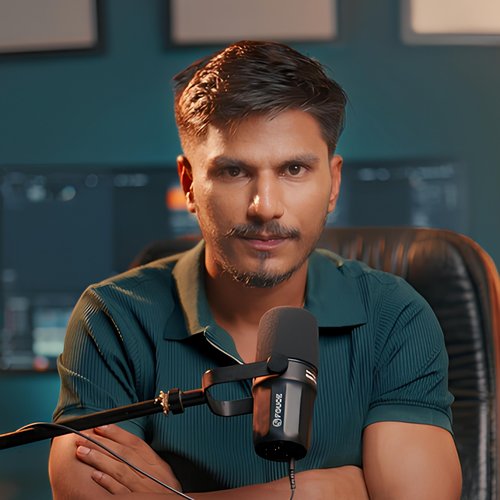
The video this post is built on — same questions, same honesty, no fancy edits either.
I'm not going to dress this one up. No fancy transitions in how I write this, no clickbait promises. If you're serious about becoming an editor, read the whole thing. If you're looking for a shortcut, this isn't it, and you can close the tab now.
Every week I get some version of the same four questions from people who want to get into editing. Not technical questions — deeper ones. Which software should I learn. Where do I actually learn from. How do I get my first client. And honestly — should I even do this at all. I'm answering them here the way I'd answer a friend, not a student.
Which Software Should You Learn?
It depends entirely on what you're editing, not on which software is "better." If you're cutting music videos or films, you're choosing between Premiere Pro and DaVinci Resolve. If color grading matters a lot to you, go Resolve. If you're a documentary-style editor where color isn't the main event, Premiere works fine too — plenty of editors cut in Premiere and grade in Resolve, and slowly get good at both. Nothing wrong with that.
But here's the shift that's actually happened in the last couple of years: editors today aren't just cutting films and music videos anymore. A huge amount of editing work now is social media content — the kind of video you're reading about right now was edited by someone, and there are far more content creators needing editors than there are singers or filmmakers needing them. And social content doesn't need a heavy system the way VFX-heavy film work does.
So if you're editing for creators, a tool like CapCut is genuinely enough — more than enough, honestly. I used to think differently. I made a video a while back that did unusually well, around two lakh views, where I said software like CapCut ruins your habits because it automates everything for you. I was wrong about that, or at least I was missing something. A tool only gives you what you already have — it just makes it faster to execute. If you don't have the idea, the software won't invent it for you.
Think of it like a camera. A photographer isn't a photographer because of the camera — it's the skill. But the camera still matters at a certain level: a wedding photographer shooting big weddings needs a better camera than one shooting small ones. Same with software. If you're editing for a huge YouTube channel, sure, upgrade your system, learn the heavier tools. If you're starting out, CapCut or Filmora is more than enough. Learn Resolve or Premiere too if you want — no downside — but don't let "I don't know DaVinci yet" stop you from starting today.
Where Should You Actually Learn From?
If you genuinely have no money, don't buy any course — not mine, not anyone else's. If you're young and you've got two, three, four years ahead of you, take the free route and take your time. It'll take longer, and you'll learn things in a less structured order, but it works — I know because that's roughly how a lot of us started.
If you have some money and want a faster, more structured path, a course can shortcut a lot of that trial and error. I won't pretend I don't sell one — I do, and I built it to be affordable specifically for students editing on a laptop or even a phone, not priced like our full color grading course. But that's a convenience, not a requirement. Nobody owes anyone their money to become an editor. Focus on learning, whichever route gets you there.
Focus on Creativity, Not the Software
Here's the thing most beginners get backwards: they think mastering the tool is the goal. It isn't. At the end of the day, an editor's job is to make the feeling land — a gangster song needs to feel like a gangster song, a product recommendation needs to actually make someone want to check the link in the description. That instinct is what you're actually building, and no software teaches it.
So how do you build it? Watch other people's work, constantly. If you cut music videos, study other music video edits. If you cut films, study other films. Copy what you see at first — genuinely, don't be afraid to copy. Nothing in this world is fully original. The concepts you were taught in school were discovered by someone decades ago and handed down so you could build on them, not worship them. Everything I teach, I learned from someone else and added my own layer on top. Copy an effect you like, use it, and somewhere in that process you'll find yourself improving on it. That's the actual path to developing your own style — not avoiding influence, absorbing it.
A good exercise: take one of your favorite creator's videos, download it, strip the audio, and re-edit it the way you think it should have been cut. If there's a product mention with no visuals to back it up, add them yourself. If a transition could've hit harder, redo it. You're not stealing anything — you're practicing with real material instead of a random stock clip.
How Do You Get Your First Clients?
First, decide if you want to freelance or work full-time on salary — the long-term plan differs, but the starting point is the same either way: nobody's paying you at the start, because you haven't proven you can do the work yet.
So prove it without being asked. Take that re-edit exercise from the last section and actually send it to people. Download a creator's video, edit it better, and send it to them directly — that's a real portfolio piece, not a demo reel of stock footage nobody asked for. I get thumbnail designers doing exactly this to me constantly — they take one of my thumbnails, redesign it, and send it over. Some of them impress me enough that I actually buy the redesign, even when I don't use it, just because the effort deserved payment. That's the move: show, don't pitch.
If you're a complete beginner, offer your first edit for free — genuinely free, not "free" with strings attached. Once you've got a couple of decent pieces done, stop offering free work and start sending your profile directly instead, then negotiate from there. And once you're editing for someone with real reach — 50,000+ followers, 200,000+ subscribers — they need editors, period. That demand isn't going away.
Should You Even Become an Editor?
Here's the honest part. A person can become anything they genuinely want to become — but probably not something they don't actually want, even if it looks easy from the outside. And editing is not easy. I'm recording at 2 AM some nights because I'm also the one shooting. After that I'm still copying footage, sometimes even rough-cutting or grading before I sleep, just so my editor has something ready when they walk into the office the next morning. We work through the night more than people realize. We forget to eat before we forget to finish a deliverable. If there's one thing that genuinely makes me happy, it's sitting in front of a computer and editing — that's not a humble-brag, it's just true, and it's the only reason I'd call myself a better editor, cinematographer, or colorist than someone more naturally talented who simply doesn't love the work as much. Love for the craft is what makes someone give it everything. Without that, talent alone runs out of gas.
So start small. Edit a friend's video. Edit your own. If the pull toward doing it comes from inside you, you'll know — and if you have to force yourself into it every single time, that's your answer too. This work is genuinely hard, and if you think it's five minutes of dragging a clip and adding a filter, you're not ready for what it actually takes. Real money in this field comes to editors who are willing to become genuinely excellent at it, and excellence takes time, effort, and real dedication — not a shortcut.
One last thing, and I mean this more than anything else in this post: don't take the pressure too far. Sleep properly. Eat on time. Look after your eyes. You're helping build someone else's career — don't wreck your own life doing it. I've become someone who doesn't feel at peace without a computer in front of me, and I don't say that with pride. Balance your work and your life better than I have. You can absolutely build something great in this field — just don't become me in the process.
If you watched the video all the way through and read this far, I'd bet you're serious enough to make this work — in editing, or in whatever you end up choosing. That's genuinely all that matters.